

Energy
Innovative site-specific energy solutions to enhance property value and contribute to a sustainable future.
We Are A Certified B Corp™

Using Business as a Force for Good.
We help real estate investors evaluate energy efficiency measures and reduce utility costs. Nova specializes in converting building energy performance into financial terms. This analysis empowers our clients to manage utility expenses and mitigate financial risk in an unpredictable energy market.


Building Performance Standards (BPS)
What are Building Performance Standards?
BPS regulations set energy and emissions targets for existing buildings and are enforced by states or local governments. Benchmarking has typically already been completed, and BPS often requires energy audits or other assessments to provide measures that can be implemented to bring the property into compliance. Failure to comply often results in substantial fines and/or other penalties such as a lien.
Existing Programs and Requirements
States and local governments are increasingly passing and solidifying their BPS regulations.
This map shows where they've passed or are in development, followed by brief summaries of current regulations.


BPS Ordinances
Brisbane Building Efficiency Program (BBEP)

Commercial: 10,000+ sq ft
Multifamily: 10,000+ sq ft
Industrial: 10,000+ sq ft
Performance Pathway & Prescriptive Pathway
Performance Pathway: All properties: 2022, 2028, 2034
Prescriptive Pathway: RCx, Improvement Report, etc.: 2027, 2033, 2039
Penalties and violations include misdemeanor offenses in addition to fee's up to $2,500.
Colorado Building Performance Statewide

Commercial: 50,000+ sq ft
Multifamily: 50,000+ sq ft
-
Energy efficiency (EUI - kbut/sf)
-
Emissions (GHG - kgCO2e/sf)
-
Standard percentage reduction from EUI (kbtu/sf) baseline
-
Standard percentage reduction from GHG (kgCO2e/sf) baseline
-
Properties with 50,000+ sq ft, Performance Years: 2026 and 2030 (2026 is now a goal rather than a hard target – no penalties for 2026)
$2,300 for first violation and up to $5,800 per month for each subsequent violation.
Boston BERDO 2.0

Commercial: 20,000+ sq ft
Multifamily: 20,000+ sq ft OR 15+ units
Emissions Requirements:
Meet maximum emissions according to building type and size using the appropriate emissions targets indicated by the policy.
Individual Compliance Schedules:
Buildings can apply to participate in an alternate compliance schedule that:
-
Sets progressively more stringent emissions reduction requirements every 5 years
-
Reduces emissions by 50% by 2030, and
-
Reduces emissions by 100% by 2050
Additional Compliance Mechanisms:
Municipal aggregation, renewable energy credits and power purchase agreements
Alternative Compliance Payments:
Buildings can elect to make payments of $234/metric ton exceeded from the target as a compliance method.
-
2025: Properties with 35,000+ sq ft
2030: Properties with 20,000+ sq ft
-
Buildings > 35,000 sq ft - $1,000 per day
-
Buildings >20,000 sq ft but < 35,000 sq ft - $300 per day
-
Maryland Building Energy Performance Standards (BEPS)

Commercial: 35,000+ sq ft
Multifamily: 35,000+ sq ft
Institutional: 35,000+ sq ft
Must meet both:
-
Meet emissions target (GHG - kgCO2e/SF) for building type.
-
Meet energy target (EUI - kbtuh/SF) for building type.
-
Performance Years: 2030, 2035, and 2040
$500 for initial offense, $750 each repeat offense (each day is a repeat offense)
St. Louis Building Energy Performance Standard (BEPS)

Commercial: 50,000+ sq ft
Multifamily: 50,000+ sq ft
Affordable Housing: 50,000+ sq ft
Performance Pathway:
-
Meet target for building type
-
Reduce EUI to halfway between baseline & building type target
Prescriptive Pathway:
-
Energy audit, improvement plan, & ECM deployment
-
Commercial & Residential Performance Year: 2024
Affordable Housing & Houses of Worship Performance Year: 2026
Failure to comply could result in $500 per day fines, imprisonment, or a loss of the property's occupancy permit
Sustainable Buildings NYC (Local Law 97)

Commercial: 25,000+ sq ft
Multifamily: 25,000+ sq ft
Industrial: 25,000+ sq ft
Performance Pathway:
Building emissions must meet target for occupancy type. Deductions in annual reported emissions are allowed to be taken for:
-
Renewable energy credits (with restrictions, up to 100% deduction)
-
Purchased greenhouse gas offsets (with restrictions, up to 10% deduction)
-
Clean distributed energy resources located at or directly connected to the building
Prescriptive Pathway:
-
Affordable Housing complies via deployment of energy conservation measures
-
-
Performance Years: 2024 through 2050
-
Target decreases: 2030, 2035, 2040, 2050
Time extension for Affordable Housing
-
$268 per ton of CO2 over limit
Oregon Energy Performance Standards
(HB 3409)
Commercial: 20,000+ sq ft
Multifamily: 35,000+ sq ft
Performance Pathway:
Meet EUI target for building type
Prescriptive Pathway:
Energy audit, Energy Management Plan, ECM deployment, & Operations and Maintenance Program
Tier 1
-
Performance Year 2027: 200,000+ sq ft
-
Performance Year 2028: 90,000+ sq ft
-
Performance Year 2029: 35,000+ sq ft
-
-
Tier 1: $5,000 plus up to $1 per sq ft per year
-
Tier 2: no penalties at this time
-
Washington Clean Buildings Performance Standard - Tier 1
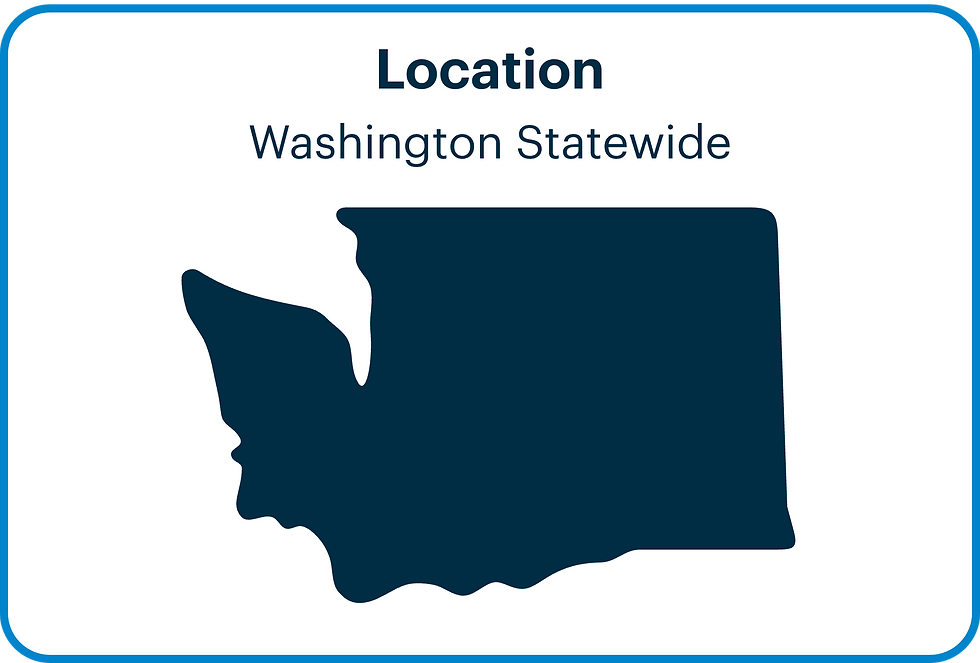
Sum of nonresidential, hotel, motel, and dormitory over 50,000 sq ft
Must complete all of the following:
-
Benchmark building
-
Implement an Operations & Maintenance program
-
Create an Energy Management Plan
-
Meet energy performance metric (Meet EUI OR Perform energy audit)
-
-
Over 220,000 sq ft: June 1, 2026
-
90,000 - 220,000 sq ft: June 1, 2027
-
50,000 - 90,000 sq ft: June 1, 2028
-
$5,000 plus up to $1.00 per sq ft per compliance cycle
Washington DC Building Energy Performance Standards (BEPS)

Commercial: 10,000+ sq ft
Multifamily: 10,000+ sq ft
Performance Path:
-
Reduce baseline EUI by 20%
-
Standard Target Path (ENERGY STAR Score above 50)
-
Reach building type target
Prescriptive Path:
-
Implement energy efficiency measures (package must achieve a minimum of 25% site EUI savings)
Alternative Compliance Paths:
-
Allows an owner to apply to follow a path with special criteria
-
Performance Year 2026:
-
Municipal buildings with 10,000+ sq ft
-
Private buildings with 50,000+ sq ft
Performance Year 2027:
-
Private buildings with 25,000+ sq ft
Performance Year 2030:
-
Private buildings with 10,000+ sq ft
-
-
$10 per sq ft for being outside of target
-
$100 per day for noncompliance
-
Reno ReEnergize (Voluntary)

Commercial, Multifamily, Industrial
Reduce energy and water use 20% by 2025
April 1st, 2026
Voluntary – No fines at this time
Vancouver Annual Greenhouse Gas & Energy Limits By-Law

Commercial: 100,000+ sq ft
Meet emissions target (GHG - kgCO2e/SF)
Performance Years: 2026 and 2040
None


Energy Audits
Energy modeling evaluates the energy efficiency of structures, for both existing buildings and those in the planning phase.
Modeling enables developers and investors to understand the energy implications of a range of variables, such as wall assemblies, building orientation, and mechanical systems.
At Nova we utilize eQuest and TREAT Multifamily, which are industry-standard software platforms for building energy modeling.
Building owners can significantly cut energy expenses, reduce repair costs, and prevent major system failures by proactively implementing efficient operations and facility management.
Nova develops custom Operations and Maintenance (O&M) manuals to provide documentation for optimal maintenance and operation of a facility's systems.
What’s Involved?
Operating diagrams and instructions described in lay terms for operators.
Hard copy and electronic formats.
Availability as a web-based resource for building operators and asset managers.
Building operator training gives your site maintenance and operations staff the tools they need to operate your investment as cost-effectively as possible.
Our training programs are customized to your equipment at each site, to the skills and concerns of your maintenance staff, and in alignment with your goals as an investor.
We recommend conducting training with the development of the operations and maintenance manual to ensure systems are well documented in the event of staff turnover.
Building Envelope Commissioning (BECx) is a systematic process that ensures the performance and functionality of a building's enclosure or envelope. The building enclosure includes all components that separate the interior and exterior environments, such as the exterior walls, roof, windows, doors, and foundation.
Heating, Ventilation, and Air Conditioning (HVAC) commissioning is a methodical and documented process that ensures the proper design, installation, and energy efficiency of HVAC systems within a building.
Why is HVAC commissioning important?
Enhances the reliability, energy efficiency, and comfort of a building by identifying and addressing potential issues early in the construction process.
Helps prevent problems such as inadequate heating or cooling, poor air quality, and inefficient energy consumption.
Contributes to the long-term sustainability and performance, as well as lowers maintenance costs of the constructed facility.
Nova is a qualified partner for multiple incentive programs. Our Strategic Energy Group serves as the energy analyst and project manager for building owners. In this capacity, we access funding for up to 50% of the project costs, and optimize the retrofit scope to maximize all available incentives and rebates.
Energy Retrofit Costs
Program Incentives
Shorter payback period and improved financial benefit
Nova offers strategic energy planning and risk management to reduce energy costs over the long term.
Effective energy strategies need to be grounded in tangible realities and hard data. For this reason our approach commences with a Discovery Phase, which involves investment-grade energy audits and analysis of utility bills. Our objective is to establish a baseline energy use for each building within a portfolio.
Following this, we evaluate the collective potential of the portfolio and explore various financing options, including low-interest loans, as well as state, federal, and other available rebates and incentives.
Five-Year Strategic Plan
Following the analysis conducted during the Discovery Phase, we formulate a Five-Year Strategic Plan. In the initial year, we prioritize implementing measures with the highest return on investment. The generated cash flow from these measures is then utilized to finance subsequent improvements or address non-energy-related capital requirements.
By establishing the decision-making infrastructure in the first year, the owner can access these tools throughout the project's life cycle. In later years, these tools serve as valuable guides for decisions related to capital planning, ongoing management of energy pricing volatility, and adapting to changes in financing terms, energy pricing, capital costs, and other variables.
Energy Audits
Energy audits provide investors with a comprehensive understanding of a building’s energy use, identifying opportunities to save energy, reduce costs, and enhance the property's value.
The management of energy expenditures considers four factors:
The energy needed to achieve the building function and maintain occupant comfort
The maintenance and retrofit plan for the building
Reducing the cost of purchased energy
Reducing energy consumption
Energy auditing begins by identifying how energy is used, aiming to eliminate unnecessary energy waste at the end-use level before addressing efficiency improvements in the main equipment. The level of detail and goals can vary among different types of multifamily energy audits. Our firm typically conducts ASHRAE Energy Auditing.
Decarbonization
Each energy audit includes four levels of recommendations tailored to your specific property or portfolio, designed to drive decarbonization efforts:
Immediate Opportunities
Often called "low-hanging fruit," these cost-effective recommendations can be implemented right away and have short payback periods. Examples include upgrading lighting, water fixtures, controls, and performing re-tuning or retro-commissioning.
Opportunities at End of Useful Life (EUL)
These recommendations consider the expected useful life (EUL) of your equipment. More efficient equipment options are suggested, and incremental costs and payback periods are provided when a Green Property Condition Assessment (PCA) is completed. This level typically includes HVAC systems and higher-cost capital improvements.
Comprehensive Recommendations
These recommendations align with other goals and assessments, such as the climate risk assessment for the property or the ESG materiality matrix for the company. Examples include incorporating renewable energy or installing a vegetative roof.
Net Zero
This last step closes the gap between reduction due to energy efficiency improvements and getting the property to net zero. It includes assessment of carbon offsets, RECs, procurement of green power, and offsite renewables.

ASHRAE Energy Audits
The American Society of Heating, Refrigeration, and Air-Conditioning Engineers (ASHRAE) has developed five levels of energy audits on buildings.
Level 0: Benchmarking
The first level is an initial analysis of the overall energy usage. This analysis is based on historical utility use and costs, comparing the building's performance to similar structures. This benchmarking process aims to assess whether additional analysis is necessary.
Level 1+: Energy audit survey and analysis of low-hanging fruit
The first level is an initial analysis of the overall energy usage. This analysis is based on historical utility use and costs, comparing the building's performance to similar structures. This benchmarking process aims to assess whether additional analysis is necessary.
Level 3: Investment-Grade multifamily energy audit
This audit is a detailed analysis of capital-intensive modifications, with a focus on Energy-Related Water-Efficient Measures (EWEMs). The analysis may include advanced on-site measurements, and computer-based simulations to precisely assess energy retrofits.
Level 1: Walk through energy audit
This audit is a visual inspection to identify low-cost improvement opportunities or obvious areas of energy waste and inefficiency. The report generated includes recommendations to prioritize efficiency projects and determine if a more detailed energy audit is necessary.
Level 2: Energy audit survey and analysis of all energy and water opportunities
The Level 2 audit estimates installation costs and savings for all measures, including low and high-cost improvements. A detailed financial analysis considers implementation costs, site-specific savings, and customer criteria.
Energy Benchmarking
Energy benchmarking is the comparison of a building’s energy consumption against similar buildings, taking into consideration factors such as weather, fuel type, building construction, and occupancy.
This comparison is the initial step in assessing a property's potential for energy conservation and determining whether it should undergo a comprehensive investigation through an energy audit.
Identifying poorly performing assets within a real estate portfolio enables efficient allocation of our clients' time and financial resources.
Utility Monitoring
Monitoring utility expenses on a monthly or quarterly basis allows for fast detection of fluctuations in energy consumption. For example, catching water leaks early or discrepancies with a utility budget can account for real savings in a short period of time.
Utility monitoring helps assess the effectiveness of retrofits in existing buildings and, in the case of new constructions with energy models, tracks the building's performance against projections.
If Nova detects any unexpected trends in utility usage, we will promptly notify our clients and provide a solution.

Benchmarking with ENERGY STAR® Portfolio Manager®
We utilize the ENERGY STAR® Portfolio Manager® software to assist our clients in energy benchmarking, prioritizing investments, tracking energy savings, and identifying buildings with poor energy performance.
A property with an energy benchmarking score of 75 or higher qualifies for an ENERGY STAR® label, indicating that it is one of the United States' top energy performers.
Multifamily buildings are now eligible to earn a score from ENERGY STAR®
Multifamily ENERGY STAR certification, which labels your property as "Green," offers several advantages. It reduces operating expenses, makes the property more appealing, attracts higher rents, boosts occupancy rates, and increases resale value for building owners and investors.
Nova has benchmarked over a thousand buildings in Portfolio Manager as an ENERGY STAR Partner. We are well-acquainted with common challenges faced by landlords in this process. Choosing Nova to guide you ensures a smoother, quicker, and more accurate experience.


Green Financing
Nova is a leading provider of energy audits for Fannie Mae and Freddie Mac green financing.
Fannie Mae Green Rewards
Green Rewards financing offers lower pricing, additional loan proceeds, and a free energy and water audit to finance smarter and greener property improvements.
Eligibility includes sustainable improvements to appliances, heating, ventilation, and air conditioning, and the installation of low-flow fixtures, LED lighting, and solar photovoltaic systems.
Nova Is Pre-Qualified With Fannie Mae
We have achieved pre-qualification with Fannie Mae for completing High Performance Building (HPB) reports as part of the Green Rewards program. This means delegated lenders will no longer have to submit Nova’s HPB reports to Fannie for approval.

Freddie Mac Green Up
Green Up financing offers borrowers with multifamily properties the ability to boost their Freddie Mac loan by a maximum of 50% of projected savings in energy and water usage.
Projected savings are calculated through a Green Assessment with Freddie Mac, which is an evaluation of green opportunities, estimated costs, and projected savings.
Requirements are a minimum saving of at least 15% of water or energy usage, and borrowers are given up to two years to complete the improvements. On loan closure, the cost of the Green Assessment is fully reimbursed by Freddie Mac regardless of the outcome.
Sustainable improvements to energy and water can generate potential economic savings of up to 38%, and tenant utility cost reductions of as much as 40%. Borrowers can benefit from the support of Freddie Mac Green Up, while reducing costs and protecting the environment for future generations.

Greenhouse Gas Inventory (GHG)
Developing a Greenhouse Gas (GHG) emissions inventory is becoming an important part of the corporate landscape. With this inventory, a company can:
Manage GHG risks
Identify reduction opportunities
Participate in voluntary and mandatory GHG programs
Guide investment and procurement decisions
Improve corporate reputation and accountability
To accurately report GHG emissions, a company must first define its organizational & operational boundaries. This helps to determine the types of GHG emissions within the organizational boundary that should be reported. These include:
Scope 1: Direct GHG emissions that occur from sources that are controlled or owned by an organization, such as fuel combustion in boilers, furnaces, vehicles, generators, etc.
Scope 2: Indirect GHG emissions associated with energy that is generated offsite and transported to the site, including the purchase of electricity, steam, heat, or cooling for organizational use.
Scope 3: Indirect GHG emissions resulting from value chain emissions, including upstream and downstream services.
Our Expertise
SBTi Certified Expert Credential
Three ISO 14064 Lead Verifiers

Measurement & Verification
Measurement and Verification (M&V) provides proof of the effectiveness of energy management. It helps building owners assess the property's long-term energy performance by measuring and verifying utility consumption. Importantly, M&V helps identify issues with mechanical systems or resident behaviors that may be negatively impacting energy performance.
What can M&V be used for?
To assess the performance of a single retrofit.
To assess a facility’s total energy use.
To determine how a newly constructed building is tracking relative to projected performance.
What’s Involved?
Each month, Nova collects utility bills for each meter at every site, normalizes the data for weather and other factors, and evaluates the property’s energy performance against a baseline. The results are reported to the owner on a quarterly basis.
Our measurement and verification services comply with the International Performance Measurement and Verification Protocol (IPMVP EVO 10000-1:2012). Ideally, the M&V process should commence before the retrofit period, but it can be initiated at any time.
Contact

Chief Sustainability Officer
Keely Felton

Commitment to Climate:
As part of our strategy to combat climate change, Nova Group has committed to a Net-Zero Carbon 2030 Plan.
Decade of Action to Deliver on UN Sustainable Development Goals (SDGs):
Decade of Action to Deliver on UN Sustainable Development Goals (SDGs).
.png)


